Thursday, December 30, 2010

New Year 2011 - a Good Start in Sherman


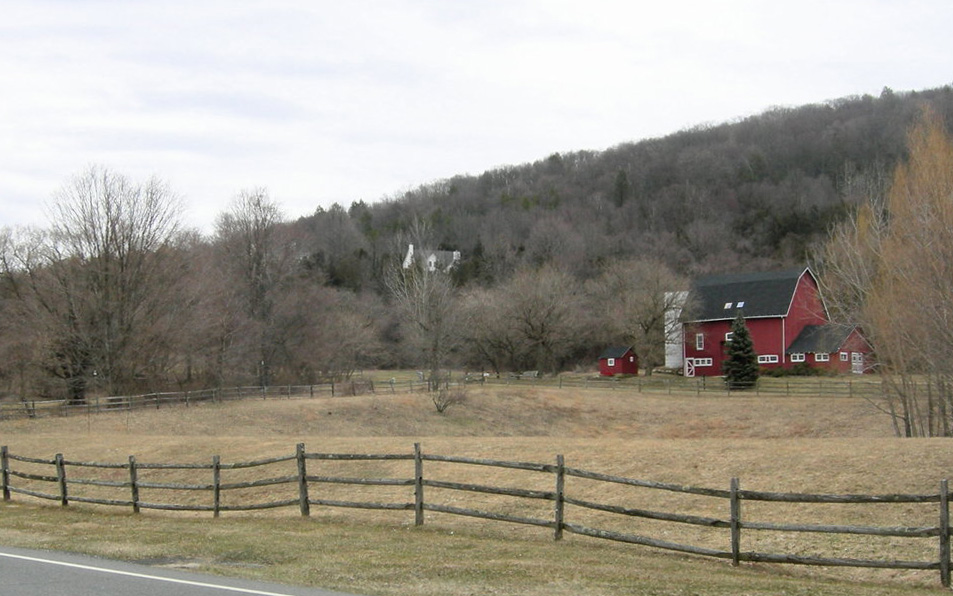
Happy Acres Farm is one of the last working farms in the town of Sherman. Owner Tony Hapanowich has lived here all his life. 


During 2010, residents approved purchase the of the farm - all 96 acres - by the town, giving Tony lifetime residency. Plans are to eventually keep it a working farm with a resident tenant family or local CSA (Community Supported Agriculture) project.


Click this link for some great photos of Tony and his animals published by newstimes.com


Thanks to barn volunteers John Jenner and Hildi Grob for sending us information on how this farm and its numerous barns will be preserved.


Photography: Hildi Grob

Tuesday, October 19, 2010

A Tale of Two CSAs

Local food supporters in these two Connecticut towns have started Community-Supported Agriculture projects on historic farms purchased by each town for open space.

BEFORE -

In Cheshire, the old Lassen Farm is now producing weekly supplies of vegetables for its subscribers as Boulder Knoll Community Farm. When the farming group began, the old red dairy barn stood next to the fields.


In Woodbridge, the Massaro Farm on Ford Road had a decrepit-looking green gambrel dairy barn as well as a few other outbuildings adjacent to the vegetable plots.


AFTER -

The "after" picture reflects the different fate of each barn. The refurbished Massaro Barn stands proud in its new coat of red paint. The Lassen Barn is only a memory.


Photography: T. Levine, C. Hitchcock, F. Jordan

Tuesday, September 14, 2010

September Happenings


We've passed another milestone - over 6,000 barns in our collection - check www.connecticutbarns.org to see your town and all the rest!

Coming events this month:
  • Volunteer Barn Surveyors Workshop - Thursday September 16 at ECSU in Willimantic - 6-8 pm
  • Historic Barns will be at the Durham Fair September 23-26.
  • Additional appearances in Chester, Suffield, and Bolton during the month - see www.connecticutbarns.org for dates and details.

Photography: J. McLaughlin, C. Hitchcock

Thursday, July 29, 2010

Old and New Tech in Old Saybrook


Our intrepid barn hunter Cherie is at it again - here she shares a fascinating find from her adventures in the field!

The three little pigs would be proud to live in a barn like this, framed in the old traditional New England style, but with walls made of straw.

The barn may not be historic in age - it was built in 2007 to replace a pole barn that burned - but its construction will likely stand the test of time.


While there are other houses made of hay, including a well-known one on this property, this is the only straw-bale barn we know of in Connecticut. It was built by Barn Raisers of East Haddam using traditional timber framing. The post and beam frame is joined in the English Square Rule style, mortise and tenon joints, pegged. No nails or bolts were used. In addition, very little power equipment was used in the joinery, relying instead on hand tools.

The walls are straw bales, stacked up, then covered with a mixture of clay, chopped hay, and lime plaster with a lime wash.

The owner, David Brown, organic farmer and artist, chose to color his 20 x 30-foot barn and 17 x 18-foot addition, in a light shade of southwestern brown.


The two-story barn serves as his cozy studio, above, and houses vegetables, flowers, eggs, farm equipment, and tools below. The barn was "raised" in the old way, relying on people of the community for its construction and becoming a social event that created new friendships and reinforced bonds between people who built something together, with the Barn as the "center of life."


photography by Brendan Matthews - the Barn Raisers

Wednesday, July 21, 2010

The Barn Survey comes to Litchfield County

Our next volunteer workshop is
in Kent CT,
on Wednesday, July 28
from 6 to 8 pm


Sponsored jointly with the Kent Historical Society.


We invite volunteers to help us identify the location of the barns in their towns and help with the windshield survey (simply taking a photograph of a barn, usually from the safety of a car, thus the name).

Our target area is the northwestern corner of the state including Bridgewater, Canaan, Colebrook, Cornwall, Hartland, Kent, New Hartford, New Milford, Norfolk, North Canaan, Salisbury, Sharon, and Warren.

Please join us on July 28 at 6 pm
at the Kent Town Hall, 41 Kent Green Boulevard, Kent CT.

Light refreshments will be provided.

We will present the history of barns in CT and then teach you how to categorize barns by type, use and construction technique. The workshop will involve noting the approximate locations of the barns to be surveyed. Then we will divide up the town into manageable areas for the survey groups to survey. Teams of volunteers will adopt an area to survey and input the data into our database, found at www.connecticutbarns.org.

To participate in this exciting project, please RSVP by email to
barns@cttrust.org or call at 203-562-6312.

Tuesday, June 22, 2010

Barn Art Show - Celebrate!

Celebrate Connecticut Barns
this Weekend

-
All the Details Here -

It's happening in the historic Village of Riverton, in Barkhamsted, Connecticut on Friday and Saturday, June 25-26, 2010.

Artists from across the state have lovingly documented an array of iconic Connecticut barns for this show.

Art sale
House Talk walking tour of the village district
Fly fishing - Antiques - Restaurants

Gala opening - Friday 5 - 8 pm
at Lambert Hitchcock House 8 Main Street, Riverton

Art Show & Sale plus much more - Saturday 11am - 3 pm

Sponsored by the Connecticut Trust for Historic Preservation
and
Merchants Association of Barkhamsted
Featured artwork by Robert Ensor

Wednesday, May 26, 2010

Where are barns built? Secrets of the land ...

The history of farming in Connecticut is a story about settlers looking for the best farmland - not surprising that they moved first to the flats along the Connecticut River. The rocky hills east and west were slower to be cleared and farmed, but water power was there for small mills and industry.

Compare:
Land around Windsor that is famous for Connecticut Valley shade tobacco

And an abandoned barn in Ledyard where subsistence farming has nearly disappeared.

CT ECO, a web site from the University of Connecticut and CT DEP, has valuable resources to learn about the land - all kinds of maps that you can view online or download - soils, open space, farmland, watersheds, the list goes on. There are user-friendly FAQs and tutorials to help you figure it out.

Compare the maps of farmland soils - green and yellow indicate the best soils for farming!


Windsor Locks - here's the farmland soil map with the Connecticut River at the right and Bradley Airport (guess what color it would have been before all that paving).

Here's part of Ledyard, a land of rocky hills and narrow stream valleys - Connecticut River at the left

Check it out - enjoy!

Photography: T. Levine, C. Hitchcock
Maps: cteco.uconn.edu